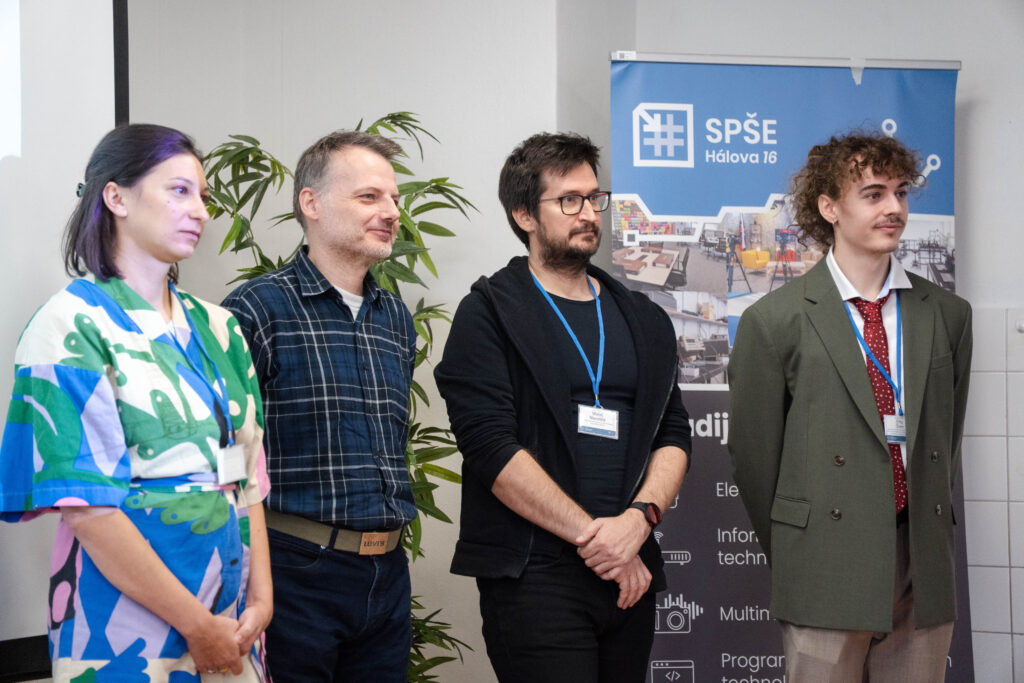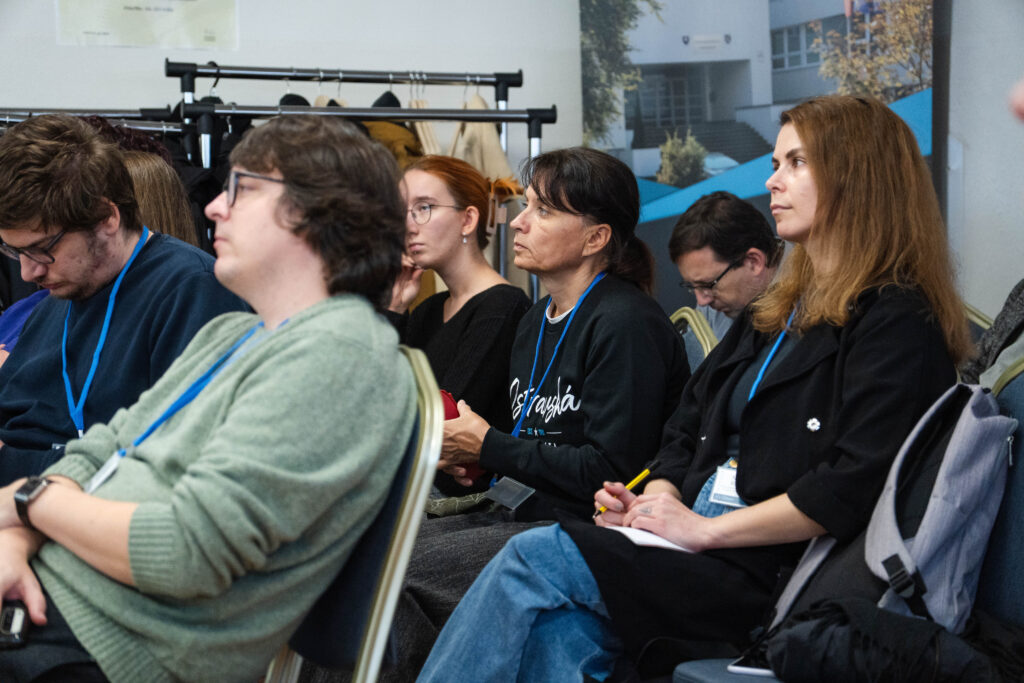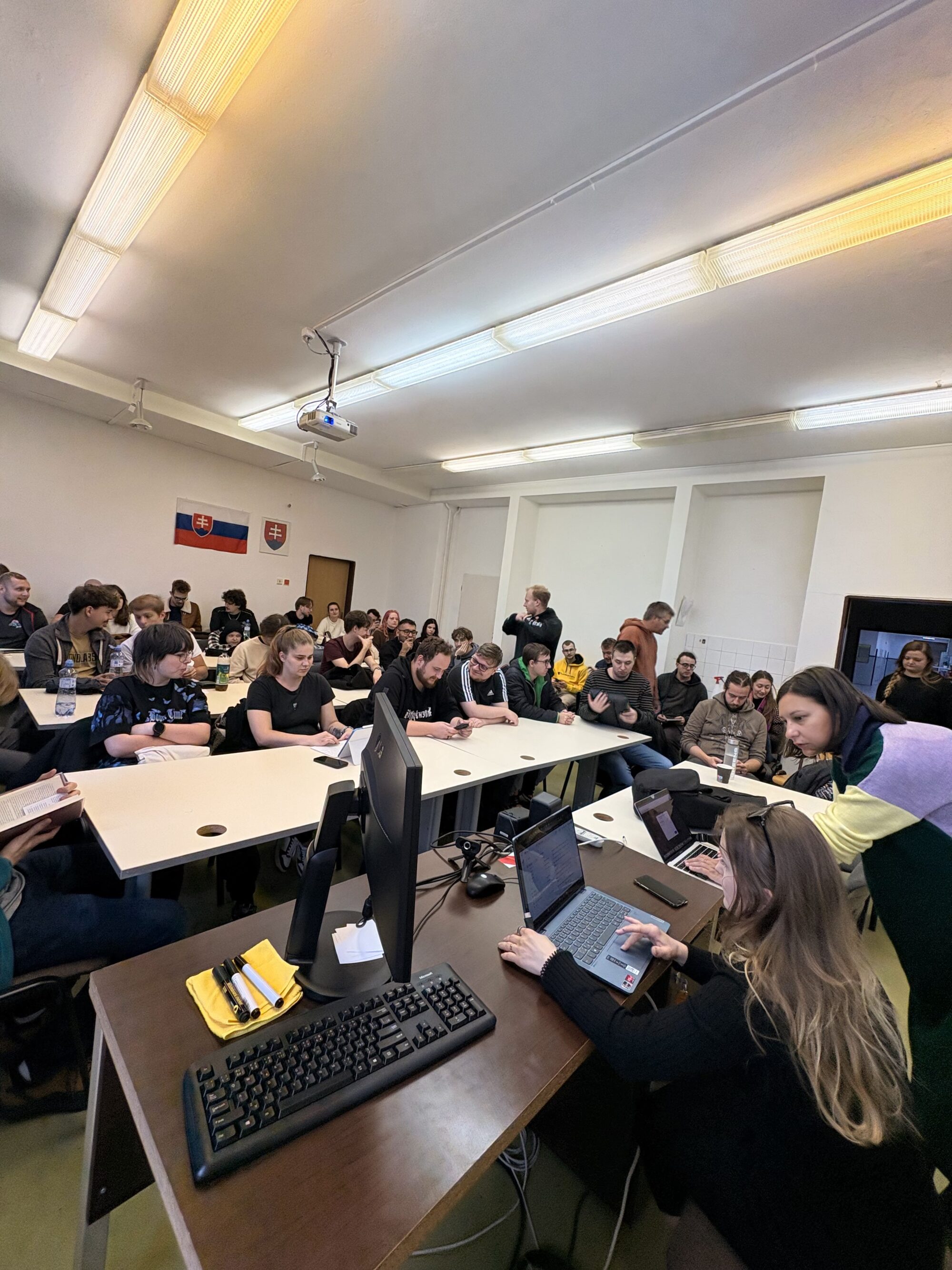
After a successful start at Comenius University, the Educational Game Design courses have now officially launched at the University of Ss. Cyril and Methodius (UCM) in Trnava. The energy and creativity of the students promise a semester full of innovation, collaboration, and playful learning.
During the first sessions, students explored the core principles of educational game design. They learned what makes a game educational, how to connect learning goals with fun and engagement. Also they know how to make ideas come to life through brainstorming and playtesting. “Our aim is to help students think like designers, not only players. They learn how to turn an educational topic into a experience that truly supports learning,” said Jakub Žaludko, course mentor. “The enthusiasm we’ve seen so far shows that creative education has great potential here at UCM.”
From Ideas to Prototypes
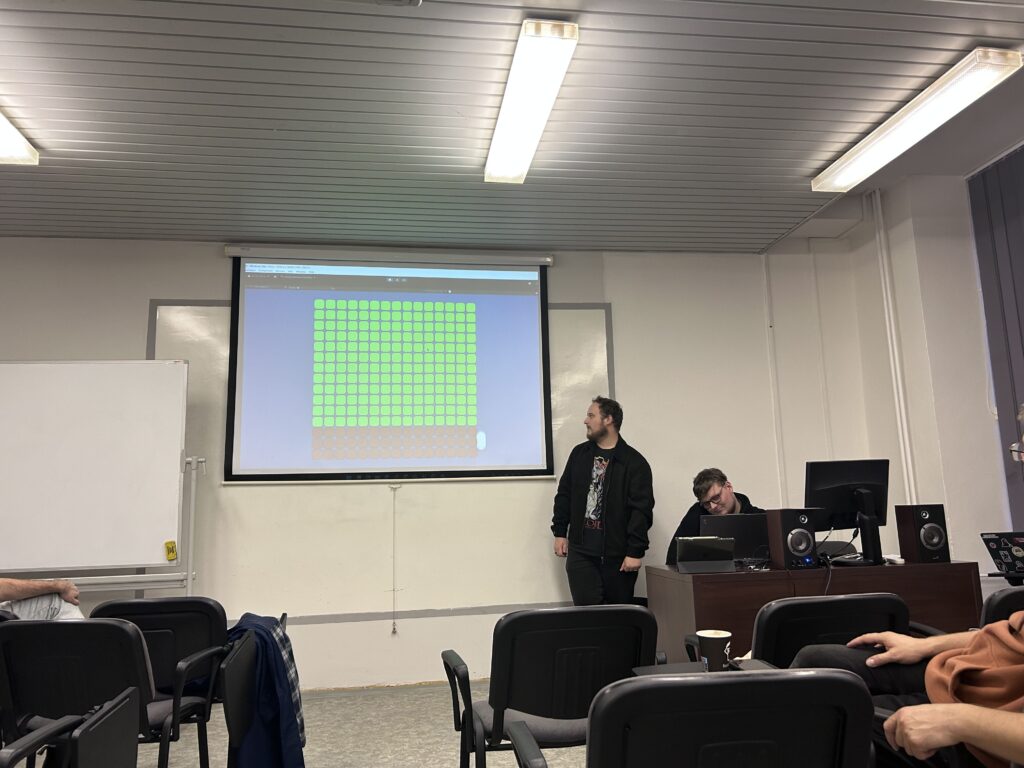
So far, six student teams have been formed. Five of them are developing digital games, while one team has chosen to create a tabletop game. The topics are wonderfully diverse – from Slovak dialects, legends, and history to physics principles and chemical formulas. Each week combines short lectures with practical teamwork and individual mentoring sessions. There students receive feedback and guidance on both design and educational aspects of their projects. “We started with brainstorming and quickly realized how challenging it is to make a game both fun and educational,” said Veronika, student of theory of digital games.
Learning Through Mentoring and Collaboration
The course combines theory, teamwork, and mentorship. Each session offers students the chance to discuss their ideas with mentors and refine their prototypes step by step. The atmosphere in class is open, supportive, and full of experimentation. The coming weeks will focus on testing the first versions of student games, improving them based on feedback. “We’re designing a digital puzzle casual game about chemical symbols. It’s exciting to see how science can be turned into gameplay,” added Zuzana, student of theory of digital games.